The haze is mineral, not dirt
If the lower windows on a Phoenix or Scottsdale house look milky no matter how often they are wiped, you are usually looking at hard-water film. It is one of the most common complaints we hear on glass in the Valley, and the source is often the irrigation, not the glass itself.
Water is hard when it carries dissolved calcium and magnesium. The U.S. Geological Survey notes that hard water is common across the western United States, and Colorado River and Salt River supplies that feed much of metro Phoenix are no exception. The water evaporates. The minerals do not. One drying cycle leaves a faint ring. A summer of nightly overspray leaves a crust.
The spots show up first where water actually hits the pane:
- Ground-floor glass beside turf, drip lines, and desert beds that still get spray
- The face of the house the heads are aimed at, often the west side that takes the afternoon sun
- Storefronts next to parking-lot planters, and lobby glass beside an entrance mister
- Panes that catch pool splash and then sit in full sun
Soap moves the dirt. It does not dissolve the crust.
A squeegee and soapy water take off dust, pollen, and monsoon film. Mineral deposits are stuck to the glass, not sitting on it. Scrubbing harder mostly smears the haze. Rinsing with a garden hose adds a fresh coat of the same calcium you are trying to get off, then the sun bakes it before anyone can dry the pane.
Leave that crust for a few seasons and it can start to etch. Etching is in the surface, not on it. Fresh deposits often feel slightly gritty, and the cloud changes once the glass is actually cleaned. A patch that is still cloudy on clean, dry glass has usually been there too long. We can improve etched glass. We cannot make it new, which is why the cheap time to deal with it is while the mineral is still on the surface.
How we clear it without a ladder
The rinse is the job. We use purified water that has had the dissolved minerals taken out, so the last pass dries without writing the spots back on. That is the opposite of a hose-down.
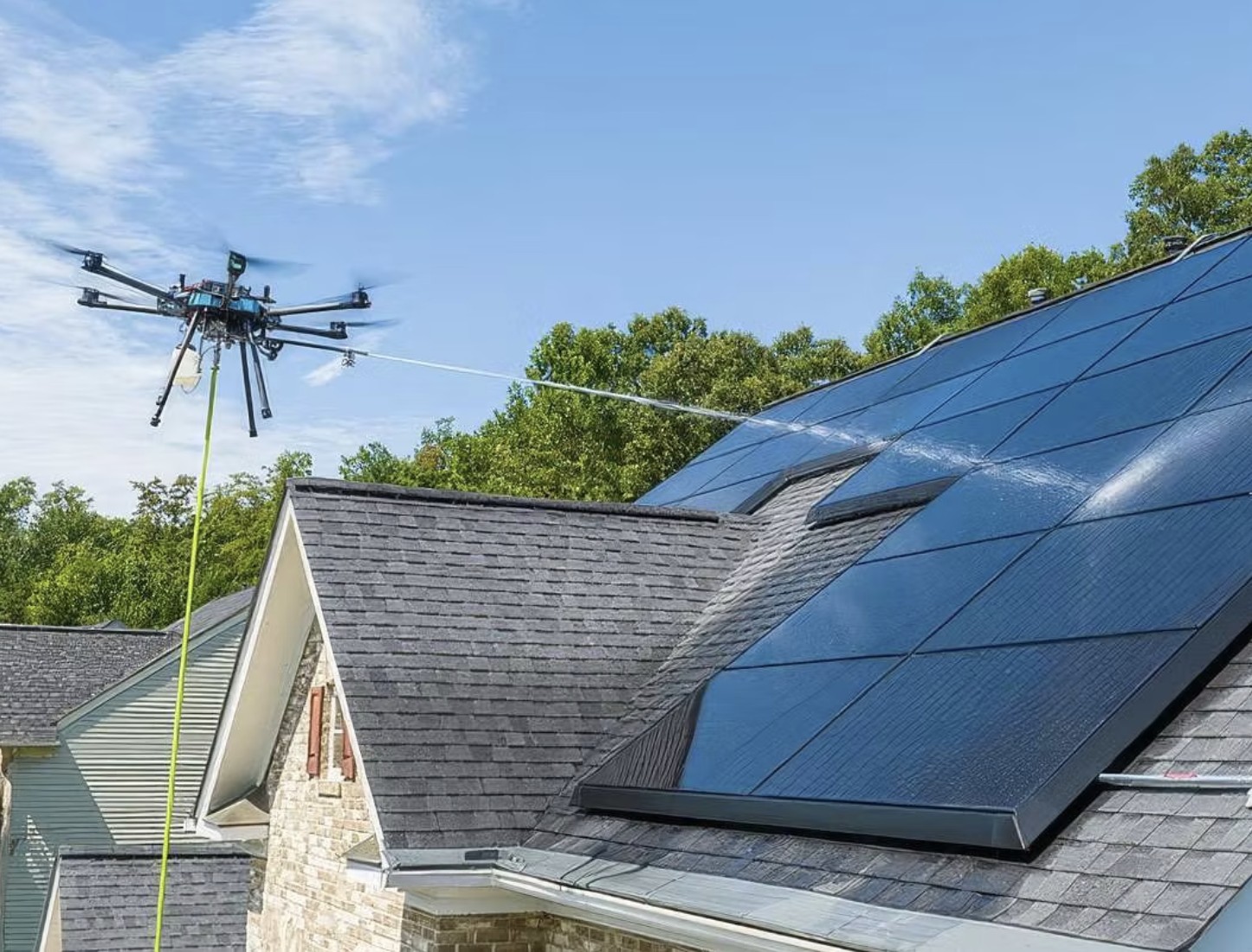
Second-story and hard-to-reach panes are a Sherpa flight. An FAA Part 107 pilot flies the Lucid Bots aircraft from the ground. Nobody leans a ladder on the stucco, and nobody stands in the beds. On a home, we can usually do the exterior without you standing there, as long as dogs are inside.
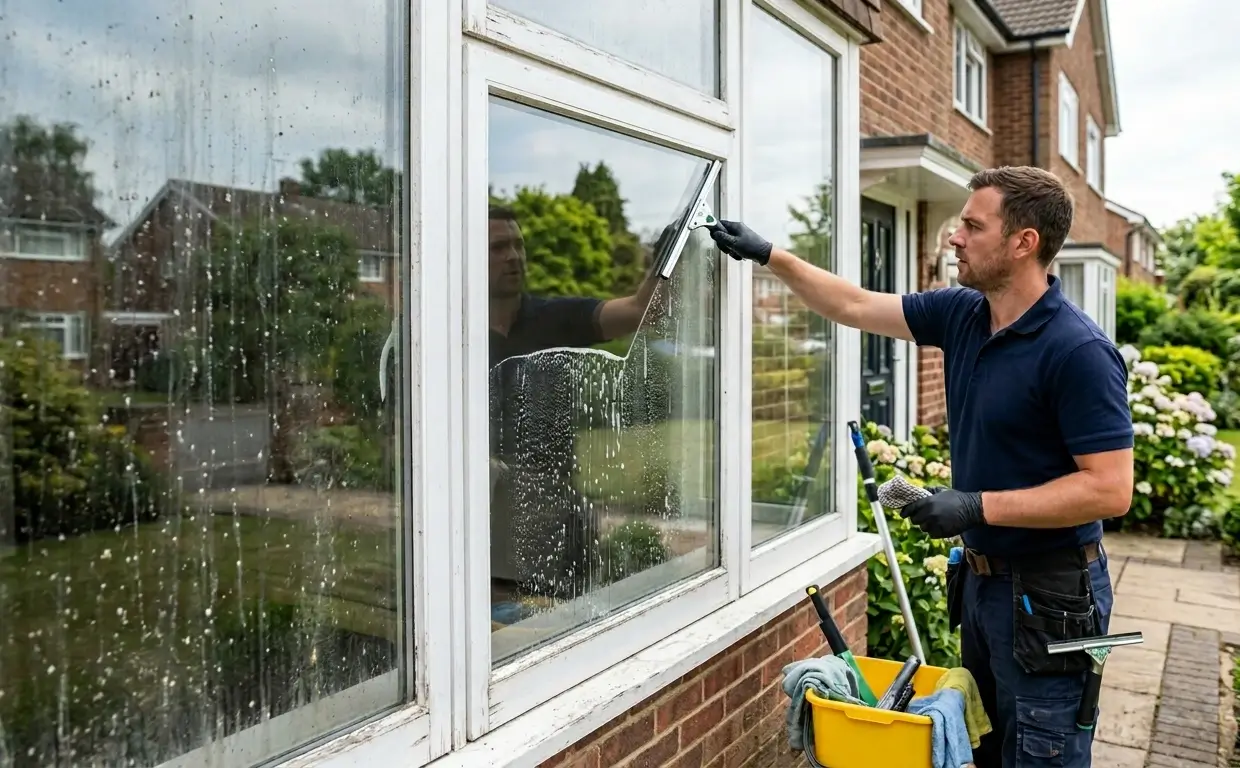
Storefronts and other ground-reachable commercial panes are often a hand wash instead of a flight. A technician is at the glass with a squeegee and the same purified water, including frames and sills a drone is not there to detail. Typical costs on that work run $2–$8 per pane overall. Exterior-only is often $2–$4. Interior and exterior is $4–$8. Small storefronts frequently land in the $6–$12 per window range. The number on your building follows an on-site look, not a guess from the street.
Keep the spots from coming back
A wash fixes the glass you have today. The next crust depends on what water reaches it after we leave.
- Aim the heads. Turning or lowering the ones nearest the wall stops most residential spotting by itself.
- Water early. Overspray that dries in the cool of the morning is less likely to bake on than a spray that hits glass already in full sun.
- Do not rinse the windows with the hose. Tap water is what made the rings.
- Put the glass on a schedule. A seasonal or quarterly wash lifts deposits before they have a season to etch. Monsoon rain will not do that job. It moves dust and leaves its own film.
Storefronts get it worse
Commercial glass along a Mesa, Gilbert, or Scottsdale frontage takes the same minerals, more often. Irrigation runs beside entries, parking islands, and planters, so the storefront is sprayed every night the landscaping runs. A property manager can fix most of the ground floor by walking the heads with the landscaper.
The rest is a schedule. Recurring purified-water washes take the film off before it etches, and a drone wash on the upper elevation does not close the door or the parking row. Send the address if you want that split: hand work on the reachable panes, the Sherpa on what a ladder should not touch.
When it is time to call
Call when the haze has been building for more than a season, when it is on second-story or clerestory glass you should not be on a ladder for, or when it returns within weeks of a normal wash. We work homes, HOAs, and commercial buildings across Phoenix, Scottsdale, Paradise Valley, Mesa, Tempe, Chandler, Gilbert, Queen Creek, and the rest of the Valley.
Tell us which panes are spotted. We will say whether the mineral can still come off, or whether you are looking at etch that a wash will only improve.
Can hard water spots be removed from windows?+–
Usually, if they are still on the surface. Fresh calcium and magnesium lift with a purified-water wash. Spots left for years can etch the glass. Etch can be reduced. It cannot be fully reversed.
Why do the spots come back right after a cleaning?+–
The water is still hitting the glass. Sprinkler overspray, or a hose rinse left to dry in the sun, lays down a new coat of minerals. Aim the heads, and do not finish with tap water.
Do you wash the inside of the windows?+–
Drone visits are exterior glass. A traditional storefront quote can include the interior when you ask for it. That is the $4–$8 per pane band, confirmed after we see the building.
Will monsoon rain clean the spots off?+–
No. Rain in the Valley moves dust and can leave more mineral film. It does not replace a purified-water rinse.