Solar
Solar cleaning from $129.
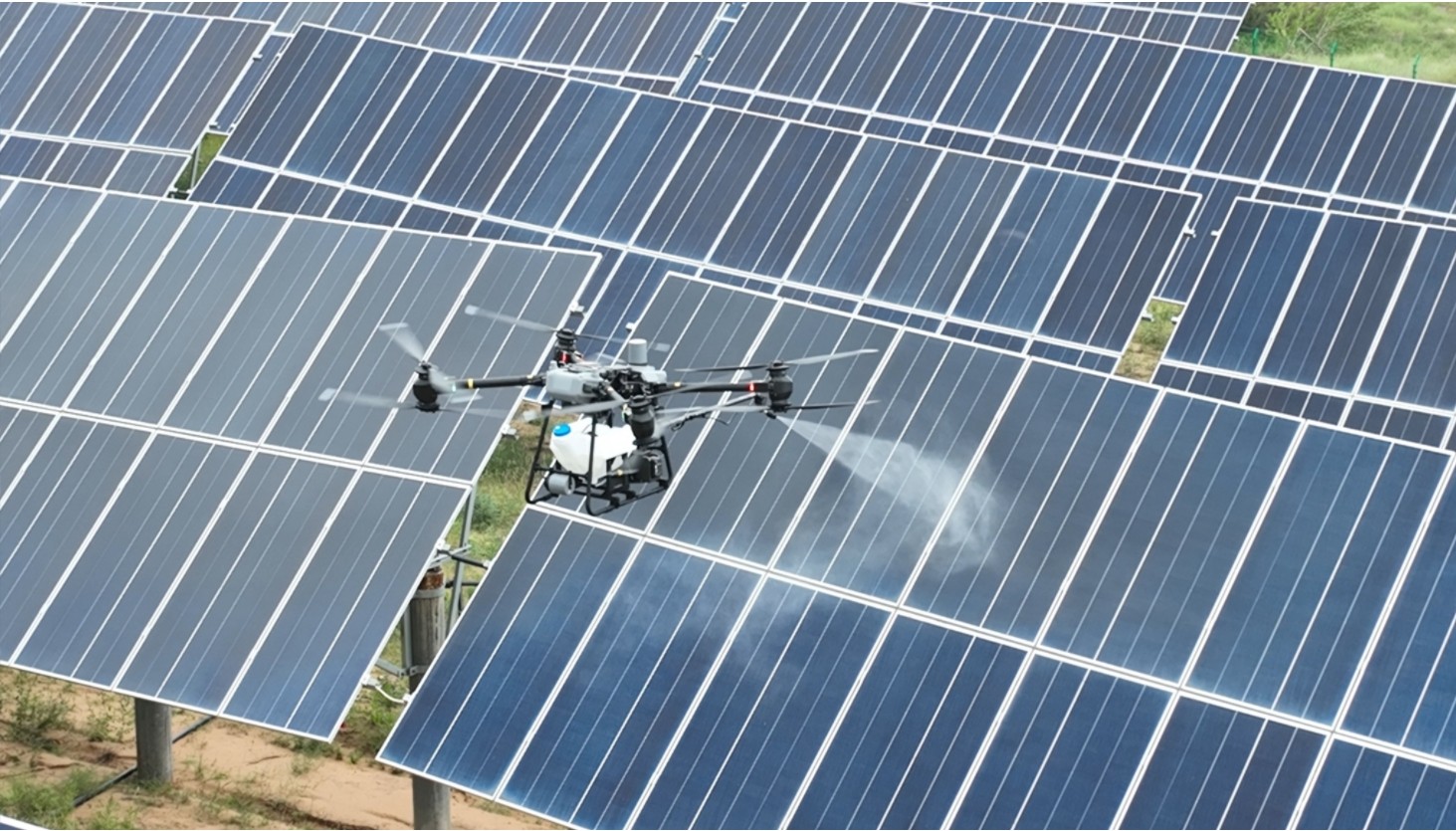
First visit for 16 panels or fewer. Sherpa drone, purified water, no contact with the glass. $149 for 17–22 panels. $199 for 23–28.
First-time residential
$12916 panels or fewer · regular $219
Sherpa drone. Purified water. Nothing touches the glass. $149 for 17–22 panels. $199 for 23–28. Limited time.
Soil is a production tax
Dust, pollen, bird film, and agricultural drift cut irradiance. On some sites that is a few percent. On others it is a fifth of the array, hiding in the monitoring as “weather.”
Boots do not belong on modules
Walking an array to brush it is how microcracks, hot spots, and voided warranties start. We never land on the glass and we never send a tech across the string.
Water that does not spot
Purified water lifts the film and dries without mineral rings — the right chemistry for anti-reflective coatings and anodized frames.
The aircraft
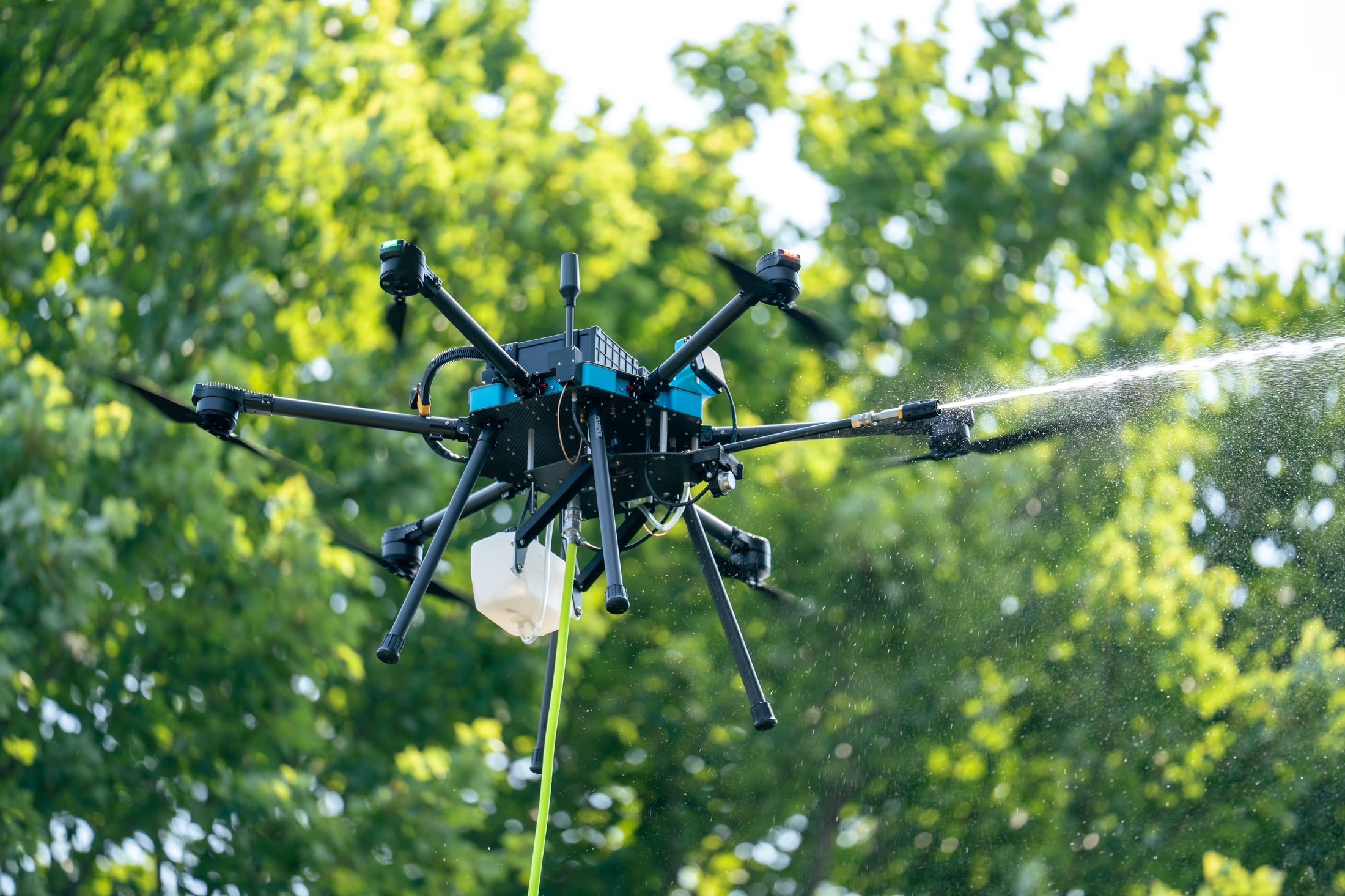
Lucid Bots Sherpa. Designed for touch-free cleaning.
Purpose-built to wash without contact. The Sherpa never lands on the array and never puts a brush on the glass — safe for panels, roofs, and the environment.
We utilize biodegradable solutions which won’t leave a residue. Film lifts. Nothing is ground in. Nothing spots the glass when it dries.
- Touch-free. Lucid Bots Sherpa Drone, designed so nothing contacts the array.
- Panel-, roof-, and environment-safe. Controlled spray. No harsh chemistry in the soil.
- No residue. Biodegradable solutions that rinse clean and dry without a film.
Cadence
Recommended schedule.
Soiling is a production tax. Wash often enough that the film never gets a season to bake on.
2×
Minimum — twice a year
Every array we fly should be washed at least twice a year. That is the floor, not a stretch goal.
4×
Optimal — four times a year
High-dust sites and heavy bird activity should run every quarter. Arizona grit and droppings cost more in lost kilowatt-hours than the extra visit.
Coverage
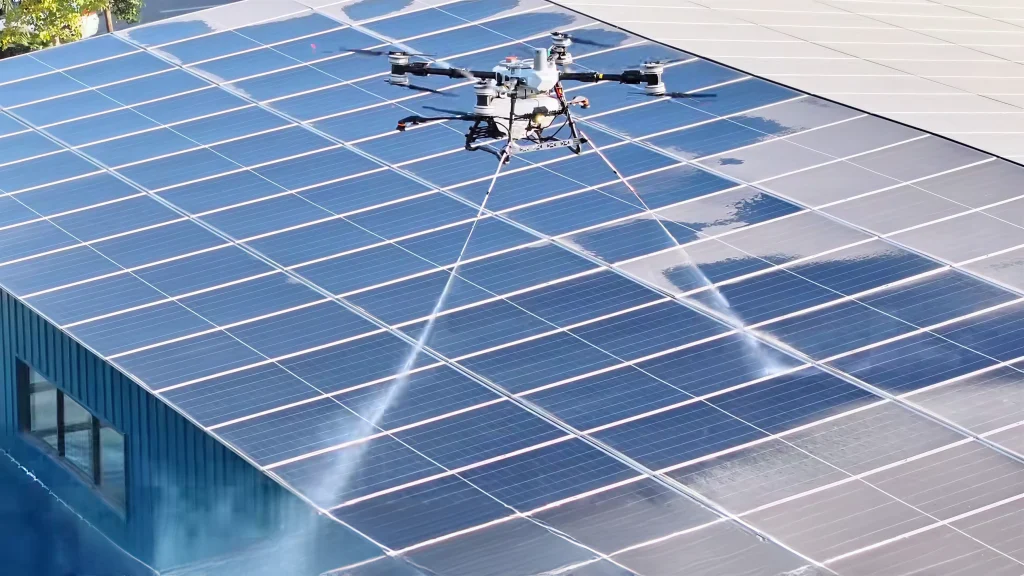
From a 12-panel home to a farm you cannot see the end of.
- Residential. Steep roofs, two-story mounts, and arrays a ladder company will not touch.
- Commercial rooftop. Big-box, warehouse, school, and office arrays — cleaned without a rooftop shutdown.
- Utility / agri-solar. Row-by-row patterns, recurring contracts, and reporting your asset manager can file.
Soiling tax
What is dust costing the array?
Soiled modules quietly clip production — often 5–30%, depending on pollen, dust, and agriculture. This is an indicative annual recovery using 1,400 kWh per kW, a conservative U.S. average. Not a guarantee.
Questions
Solar panel cleaning, answered.
Pricing, cadence, rain, drones, and the quarterly plan — tap a question.
What is the cost of solar panel cleaning?+–
Platinum Drone Cleaning currently offers a $129 first-time residential solar panel cleaning special for qualified homes with 16 panels or less (regular price $219), $149 for 17–22 panels (regular price $299), $199 for 23–28, and 29 or more varies (direct quote required).
This promotional pricing is for a limited time only.
How often should I have my solar panels cleaned?+–
Arizona’s sun, UV index, and monsoon season take their toll on solar systems. Dust, bird droppings, and acid in rain can leave a film on panels — a decrease of thousands of kWh a year. Cleaning 4× a year is optimal to keep them functioning as efficiently as possible.
Doesn’t rain clean the panels?+–
Imagine if your car sat outside in the sun without ever being washed. The dust might wash away… but the other residue wouldn’t. Would you be able to see out of your windshield after 3 months? 6 months? 12 months?
Why use a drone?+–
According to a recent study by the National Institutes of Health, the vast majority of non-fatal roofing and ladder accidents happen at home during DIY or maintenance work rather than on commercial job sites. Roofing consistently ranks as one of the deadliest occupations in the U.S., with a fatal fall rate significantly higher than other building trades.
We use drones for our safety, your peace of mind, and to eliminate the risk of you being held liable for accidents.
With a drone there is no contact with the panel itself. This is equivalent to a brushless car wash. Zero opportunity for scratches.
My significant other currently cleans them. Why should we pay to have them done?+–
Having a professional clean them is the ideal treatment. Arizona has some of the hardest water, and it will leave water spots and calcium buildup — just like your glass shower door if you don’t squeegee it.
Platinum Drone Cleaning utilizes a professional deionization filtration system that, through an ion-exchange process, removes dissolved mineral salts and charged ionic impurities from water. The result is a streak-free, spotless cleaning.
My solar is on the second story. Is that a problem?+–
No. Our drone can easily reach up to 200 feet.
I work all day. Do I need to be home for my appointment?+–
We are able to do 99% of solar cleaning without the homeowner present. Most of the time we do not even need in your backyard (depending on solar configuration). We just ask that the day of, all dogs be put away — they are not fans of the buzzing of the drone.
If you only clean our panels once every quarter, why does the subscription plan charge every month?+–
We at Platinum Drone Cleaning are a family-owned business, and we understand how everything is costing more and more. We want to be able to spread out the costs for you by paying for the service over 3 months and not all at once. We do this as a service to our loyal customers.
What does the yearly plan cost?+–
It depends on location, roof configuration, accessibility, and the number of panels you have. A standard home with 16 panels or less starts at just $39 a month; 17–22 panels cost $49; 23–28 panels cost $59 — with one cleaning a quarter, or four a year.