Soiling is a production tax, not a cosmetic issue
Dust, pollen, bird film, and mineral haze sit on the glass and steal irradiance before it ever reaches the cell. Monitoring often files that loss under “weather.” It is not weather. It is a film you can rinse off.
NREL and operator studies put typical soiling losses in a wide band — a few percent in wet climates, 15–30% in arid, agricultural, or high-pollen belts. Phoenix-metro and desert Southwest arrays sit at the expensive end of that range.
A practical cadence
Start with the climate, not a vendor’s package. Then tighten or stretch the interval using your own kWh data.
- Homes in rain-washed climates: once or twice a year is often enough.
- Arizona, Nevada, inland Southern California rooftops: every 60–90 days is a common starting point.
- Arrays next to farms, freeways, or construction: inspect monthly; wash when production sags.
- Utility and commercial sites on a PPA or production guarantee: lock a seasonal program so the loss never compounds.
How to know it is time
Compare a clear, dry week against the same week last year, weather-normalized if you can. A step-down that does not recover after a rain is soiling. A visible chalky film, bird spots that have baked on, or irrigation overspray are enough reason to book without waiting on a spreadsheet.
Do not wait for a monsoon to do the job. Rain on dusty glass makes mud. Mud dries into a crust that shades cells and is harder to lift.
Washing without walking the array
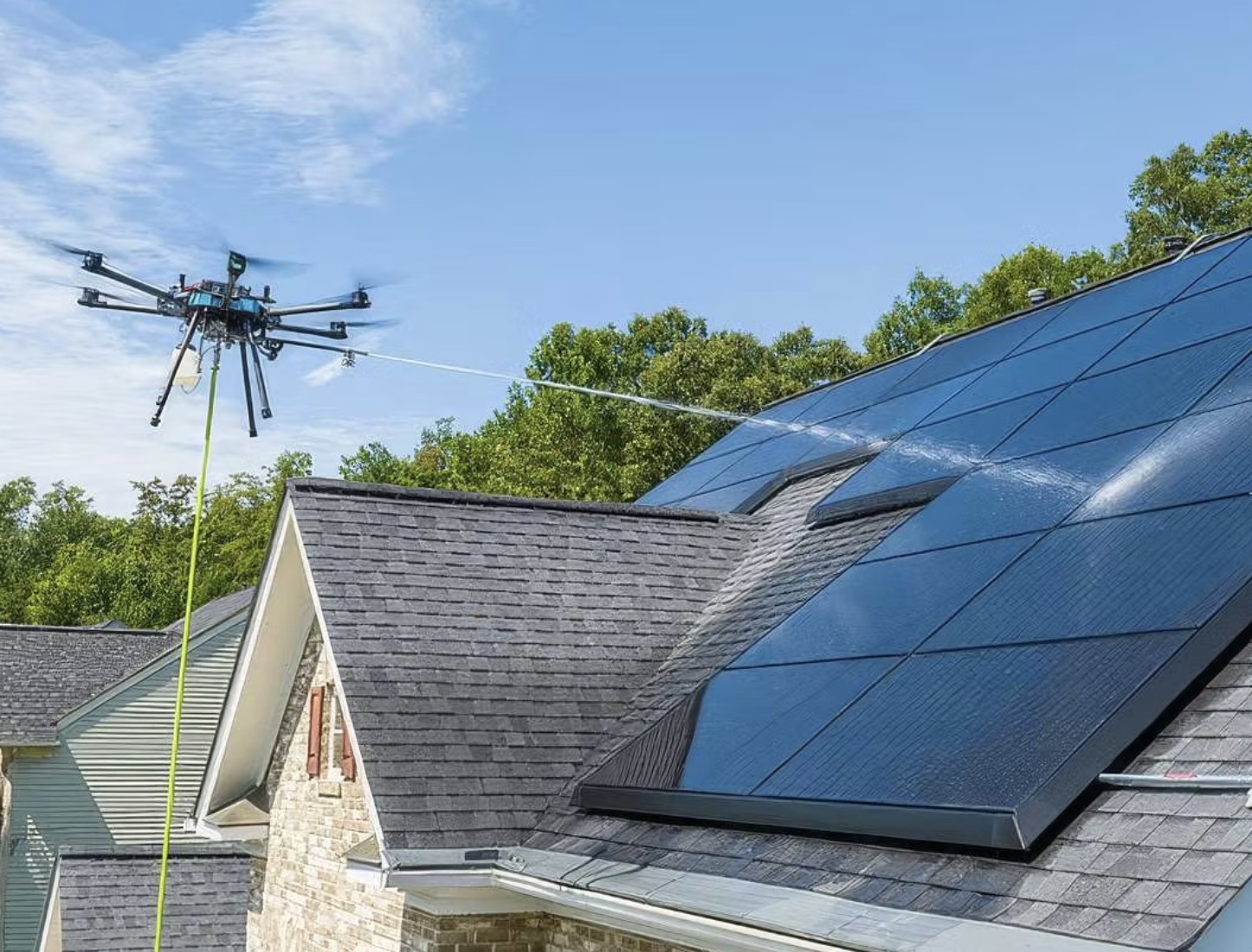
The other half of “how often” is “how.” Walking modules to brush them is how microcracks and voided warranties start. A tethered drone with purified water rinses the film from the air — no boots, no ladders, no lift on the roof.
If you are unsure whether a wash will pay, use the soiling calculator on our solar page, or send the address. We will tell you if the aircraft is the right tool before you hear a price.
Can rain replace a professional wash?+–
Light rain on a dusty array often makes mud, not a clean. In the desert Southwest, rain is not a cleaning program.
Is more frequent always better?+–
No. Wash when the recovered kilowatt-hours beat the cost of the visit. Farms on a production contract usually want a locked seasonal cadence. Homes can wait for a visible film or a dip in the app.
Will winter washes still help?+–
Yes, if the array is dry and the aircraft can fly. We do not fly in rain, storms, or winds outside the envelope. A grounded day is rescheduled, not billed.